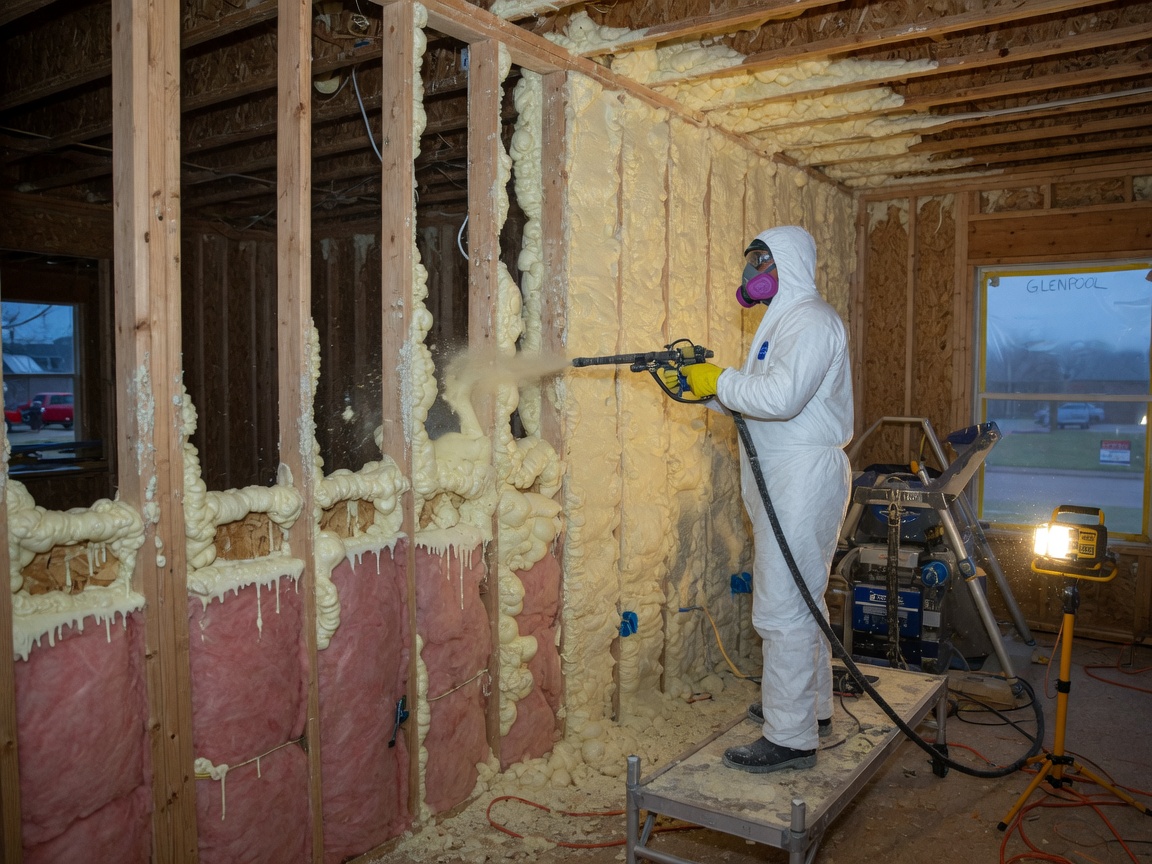
Glenpool homes built before 1990 often feature 2x4 wall cavities that leave limited room for traditional batts. Closed-cell spray foam expands to fill every gap while adding structural rigidity to older framing found in Downtown Glenpool and Glenpool South. The humid subtropical climate brings high summer moisture that can drive vapor into walls; closed-cell foam creates a vapor barrier that keeps sheathing dry without trapping condensation behind drywall.
Application timing matters here. Mild winters allow year-round work, but afternoon humidity above 70 percent slows cure rates and can cause surface tackiness. Technicians at Glenpool Precision Spray Foam Insulation monitor dew points daily and ventilate with fans when needed. In newer subdivisions near Jenks, open-cell foam is often chosen for interior partition walls because it allows drying toward the conditioned space while still cutting sound transmission between rooms.
Edge cases appear around electrical boxes and plumbing penetrations common in Glenpool’s ranch-style houses. Foam must be kept back from recessed lights and wires to meet code clearance, yet still seal the surrounding cavity. Rim joists at the top of basement walls are treated the same day as exterior walls to stop air leakage that pulls humid outdoor air through the slab edge during summer.
Homeowners notice immediate comfort changes once walls are sealed. Temperature swings between the north and south sides of a house drop because air no longer moves freely through the cavities. The same foam layer also reduces pollen and dust infiltration from nearby Tulsa traffic corridors.
Technician insight
In Glenpool the thing that catches most people out with Wall Spray Foam Insulation is the high summer humidity that hits right after we finish a job. If we don’t ventilate the house for a full day, the foam can stay tacky on the surface even though the core has cured. Older 2x4 walls in Downtown Glenpool also leave almost no room for error on electrical box setbacks.
Glenpool South Ranch Retrofit
A 1978 ranch in Glenpool South had noticeable temperature differences between rooms. We found large gaps around electrical boxes and at the top plates where air moved freely. Closed-cell foam was injected through small holes in the drywall, sealing every cavity while staying clear of recessed lights. After one day the homeowner reported the HVAC no longer ran constantly during afternoon heat.
Wall Spray Foam Insulation Services We Offer
✓Closed Cell Wall Insulation
High-density closed-cell foam fills exterior wall cavities in Glenpool homes, adding both insulation and a moisture barrier suited to humid summers.
✓Open Cell Wall Insulation
Lower-density open-cell foam is applied to interior partitions where sound control and drying potential are priorities in Glenpool South residences.
✓Retrofit Wall Spray Foam
Small access holes allow injection of foam into existing walls of older Downtown Glenpool houses without full drywall removal.
✓Rim Joist Wall Sealing
Spray foam applied at the top of basement walls stops air leakage where the floor meets the foundation in Glenpool crawl-space homes.
✓Electrical Box Isolation
Foam is carefully applied around outlets and switches to maintain required clearances while still sealing the surrounding cavity.
Wall Spray Foam Insulation Cost in Glenpool, OK
| Service | Typical Range | What Affects It |
|---|---|---|
| Closed-cell wall fill (new construction) | $1.80–$2.60 per board foot | Higher density required for vapor control in humid summers |
| Open-cell wall fill (retrofit) | $1.10–$1.70 per board foot | Lower cost for interior partitions where sound control is main goal |
| Rim joist sealing add-on | $250–$450 per house | Price moves with number of corners and foundation access |
Ranges are typical for Glenpool, OK and confirmed with an exact written quote before any work starts.
How it works
- 1
Site Assessment
Technicians inspect wall cavities, note electrical and plumbing locations, and measure square footage in the specific Glenpool neighborhood.
- 2
Surface Preparation
Dust and loose material are removed; temporary protection is placed over floors and fixtures at the 14060 S Peoria Ave shop before loading equipment.
- 3
Foam Application
Two-component foam is sprayed or injected into cavities in lifts, allowing each layer to cure before the next to avoid overheating.
- 4
Trim and Cleanup
Excess foam is shaved flush with studs, holes are patched, and all job-site debris is removed before final walkthrough.
Pricing
Most wall projects are priced by board foot after the initial assessment; final cost depends on cavity depth, foam type, and access difficulty.