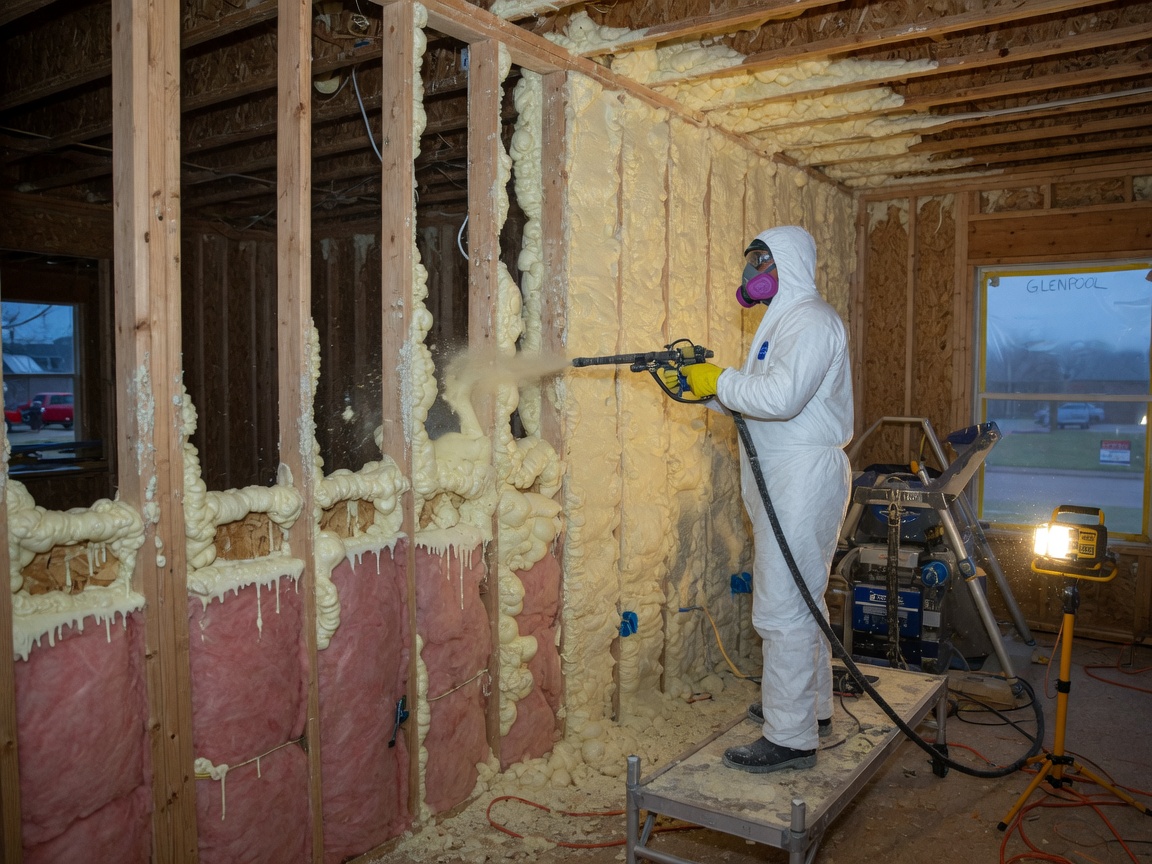
Glenpool Precision Spray Foam Insulation reaches Kellyville via S Peoria Ave and local roads to treat homes built from the 1950s through the 1980s that sit on larger lots with shallow crawl spaces. These older houses often show air leaks at rim joists and around pier foundations where red clay holds moisture after summer storms. Closed-cell foam applied directly to the underside of floors stops both air movement and vapor drive before it reaches subflooring.
Summer heat in the humid subtropical climate pushes attic temperatures well above 120 degrees in Kellyville, while mild winters still allow occasional cold snaps that drive condensation into uninsulated walls. Our crews time applications for early morning or late afternoon when surface temps stay within the proper range, and we ventilate attics first so the foam bonds cleanly to the existing rafters and decking found on most Kellyville properties.
Access to many Kellyville addresses requires maneuvering trailers down narrow gravel drives or between mature trees, so we stage equipment at the street and carry hoses to the structure. This approach keeps lawns and driveways intact while delivering consistent insulation density across both stick-built and manufactured homes common in the area.
Around Kellyville
We regularly work near:
- 📍Kellyville High School
- 📍Kellyville Elementary School
- 📍Main Street Kellyville
- 📍Route 66 through Kellyville
- 📍Kellyville City Park
Glenpool Spray Foam Insulation in Kellyville — Local Notes
- •Kellyville lots often feature red clay that retains water after heavy rains, so we recommend closed-cell foam on crawl-space floors to block ground moisture before it reaches wooden joists.
- •Many homes along Main Street and near Kellyville High School have low-pitched roofs with limited attic access; we use smaller proportioners and longer hose runs to reach those cavities without cutting extra openings.
- •Older pier-and-beam foundations common west of Route 66 need rim-joist sealing plus wall cavities filled from the interior to handle the temperature swings that occur even in mild Tulsa County winters.