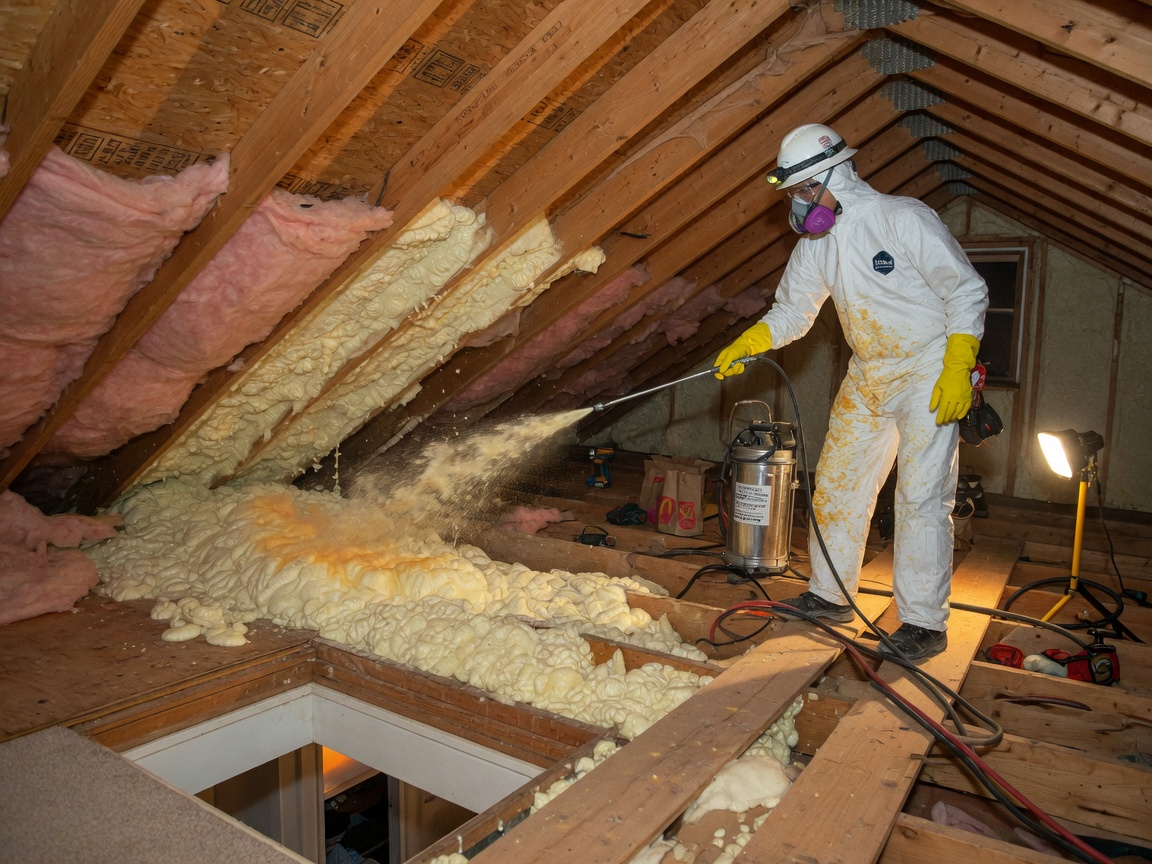
Glenpool homes built before the 1990s in Downtown Glenpool often feature vented attics with limited insulation depth and rafter spacing that complicates uniform coverage. Closed-cell spray foam creates a continuous air and vapor barrier that handles the area's summer humidity spikes while reducing heat gain through the roof deck. Open-cell foam works better in newer Glenpool South construction where attic ventilation is already adequate but still requires careful edge sealing around recessed lights and plumbing penetrations to avoid trapped moisture during mild winter temperature swings.
Tulsa County building practices frequently leave gaps around HVAC ducts and electrical boxes that allow humid air from Glenpool summers to reach cooler attic surfaces, promoting condensation. Spray foam applied directly to the underside of the roof deck in these homes eliminates the need for additional baffles while maintaining required intake vents at the eaves. Homeowners in neighborhoods near the Glenpool Conference Center commonly request removal of existing fiberglass before foam installation because the old material traps dust and limits adhesion on older sheathing.
Edge sealing around gable ends and knee walls in Glenpool attics demands extra passes of foam to prevent air leakage into living spaces below, especially in single-story ranch homes common throughout the area. The mild winters reduce thermal stress on the foam but increase the importance of proper thickness to control humidity-driven mold risk above bathrooms and kitchens. Crews working from the 14060 S Peoria Ave shop routinely inspect for existing roof leaks before application because foam can trap water against sheathing if drainage issues are not addressed first.
Technician insight
In Glenpool, the thing that catches most people out with Attic Spray Foam Insulation is the combination of high summer humidity and older unvented sections in Downtown Glenpool homes that were never designed for closed-cell application. Homeowners often skip checking for existing roof leaks first, which lets moisture get trapped against the sheathing once the foam is in place.
Glenpool South ranch attic upgrade
Homeowner noticed high cooling bills during humid summers. Inspection found thin fiberglass and gaps around ducts in the vented attic. Crew removed old insulation, applied closed-cell foam to the deck and sealed all penetrations. Utility usage dropped noticeably the following season without added ventilation work.
Attic Spray Foam Insulation Services We Offer
✓Closed Cell Attic Insulation
Applies rigid closed-cell foam directly to roof deck and walls to create a vapor barrier suited to Glenpool humidity.
✓Open Cell Attic Insulation
Uses flexible open-cell foam for sound dampening and insulation in well-vented attics found in Glenpool South homes.
✓Attic Air Sealing
Targets gaps around ducts, lights, and penetrations with targeted spray foam to stop conditioned air loss in Tulsa County homes.
✓Attic Insulation Removal
Removes old fiberglass or cellulose before new foam application in older Downtown Glenpool properties.
✓Spray Foam for Attic Ductwork
Encapsulates HVAC ducts in closed-cell foam to prevent condensation during Glenpool's hot, humid summers.
✓Moisture Control Attic Treatment
Combines foam with vapor retarders to manage humidity migration in mild-winter Glenpool attics.
Attic Spray Foam Insulation Cost in Glenpool, OK
| Service | Typical Range | What Affects It |
|---|---|---|
| Closed cell foam application | $1.10–$1.60 per board foot | Thickness and access affect final cost in older Glenpool homes. |
| Open cell foam application | $0.80–$1.20 per board foot | Common in newer construction near Glenpool South. |
| Attic insulation removal | $0.50–$0.90 per sq ft | Varies with depth and disposal needs. |
| Duct encapsulation | $2.00–$3.50 per linear foot | Includes sealing around HVAC runs. |
Ranges are typical for Glenpool, OK and confirmed with an exact written quote before any work starts.
How it works
- 1
Site Assessment
Inspect attic structure, existing insulation, ventilation, and moisture issues specific to the Glenpool home's age and location.
- 2
Preparation
Remove old materials, mask fixtures, and confirm roof deck condition before any foam application.
- 3
Foam Application
Apply chosen closed or open cell foam to specified thickness on roof deck, walls, and penetrations.
- 4
Final Inspection
Check coverage, trim excess, and verify ventilation paths remain clear for Glenpool climate demands.
Pricing
Pricing depends on attic size, foam type, and any required removal work. Quotes provided after on-site assessment.